Agricultural Equipment Power Distribution Module (PDM) Challenges
Modern agricultural equipment depends on increasingly advanced electrical systems to support controls, sensors, actuators and other connected technologies. As farm machinery becomes more capable, OEMs need power distribution modules with higher circuit density, flexible configurations and rugged environmental protection for demanding field conditions.
Electrical Capability for Modern Farm Equipment
Today’s farm equipment has rapidly evolved to become far more capable than in the past. Much of this progress comes from the incorporation of sophisticated controls, sensors and actuators across agricultural equipment platforms. Added capabilities create a greater need for power distribution module performance. More electrical and electronic devices require more distribution points, along with internal support for a wider mix of components, including:
- Relays
- Components with different configurations
- Fuses
- Multiple circuit distribution points
- Diodes
For agricultural equipment OEMs, this creates a challenge. They need compact, durable and flexible power distribution solutions capable of supporting increasingly complex electrical systems.
The Push for Standardized Modular Components
To better manage the growth of new devices and power distribution modules, agricultural equipment OEMs are working to reduce the number of different components used across individual machines and broader product platforms. Instead of sourcing many unique assemblies, OEMs often look for suppliers with standard, modular and configurable products capable of serving a wide range of equipment requirements.
This need applies to many component types, but it is especially important for electronic and electrical assemblies. A modular power distribution module family can help OEMs simplify sourcing, reduce platform complexity and support more consistent electrical architecture across multiple equipment lines.
The Challenge for Multi-Platform PDM Design
OEM requirements for high-density, multi-platform power distribution modules called for a fresh engineering approach from the GEP Power Products team. The goal was to create a family of PDMs flexible enough to support different agricultural equipment platforms while still helping OEMs reduce component variety. The power distribution module family needed to address several key design needs:
- Multiple mounting options
- Custom labeling for different equipment platforms
- Compact packaging
- Support for different numbers of internal components
- Rugged protection for agricultural environments
- Fast development for simultaneous platform integration
Configurable Power Distribution Modules
To support the need for compactness and a wide range of component counts, GEP Power Products developed a flexible PDM product family with several base options. The family includes:
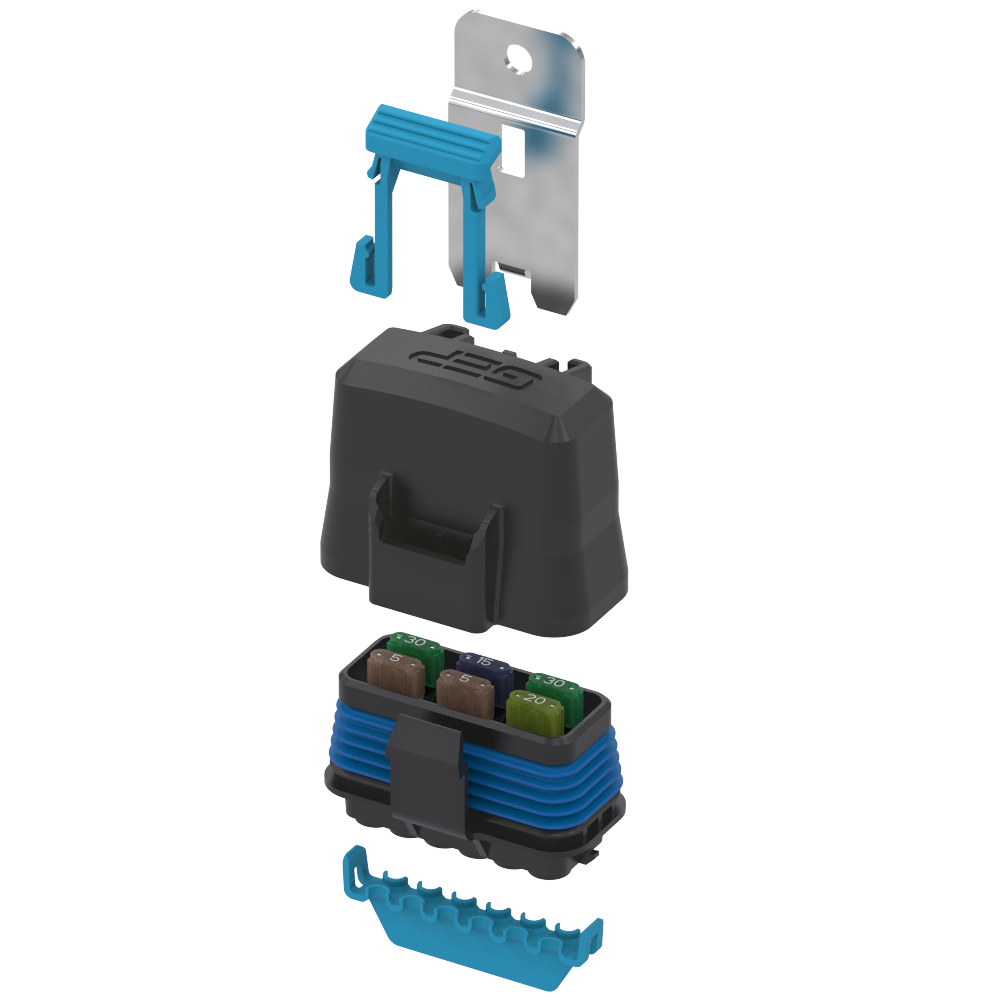
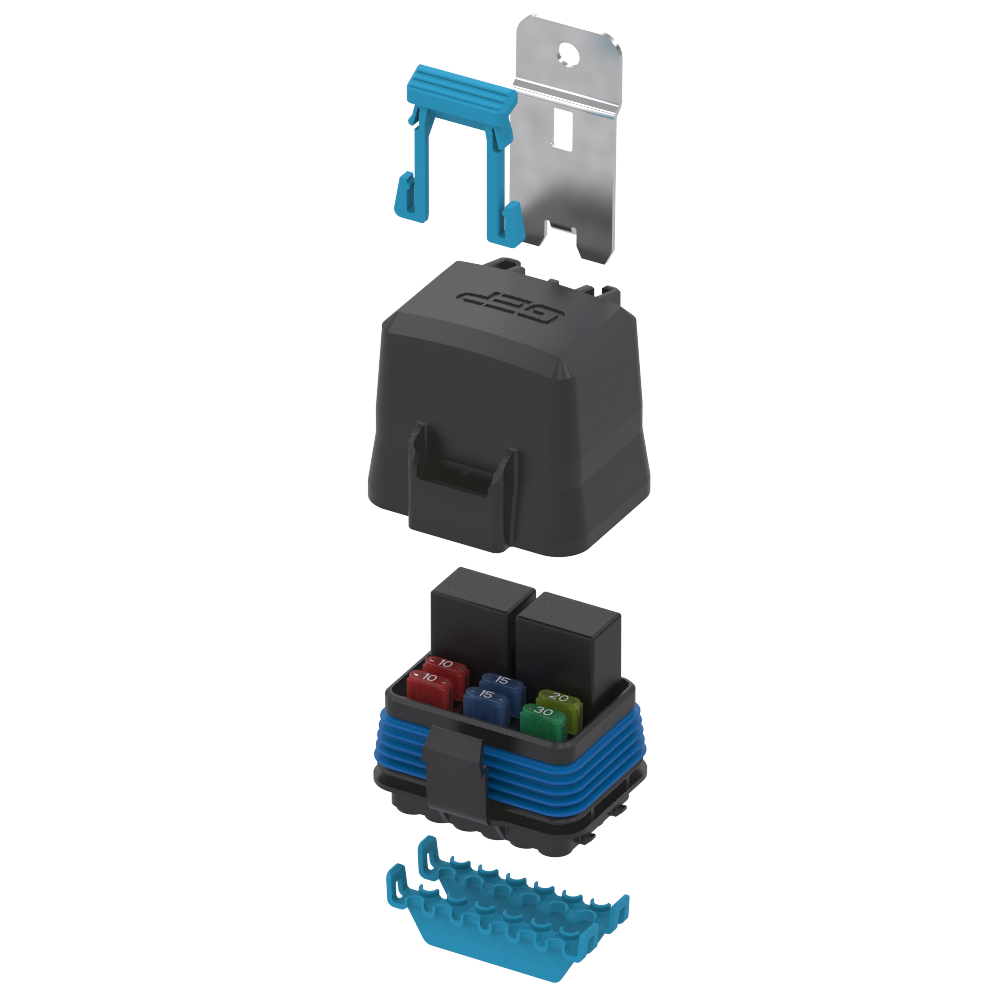
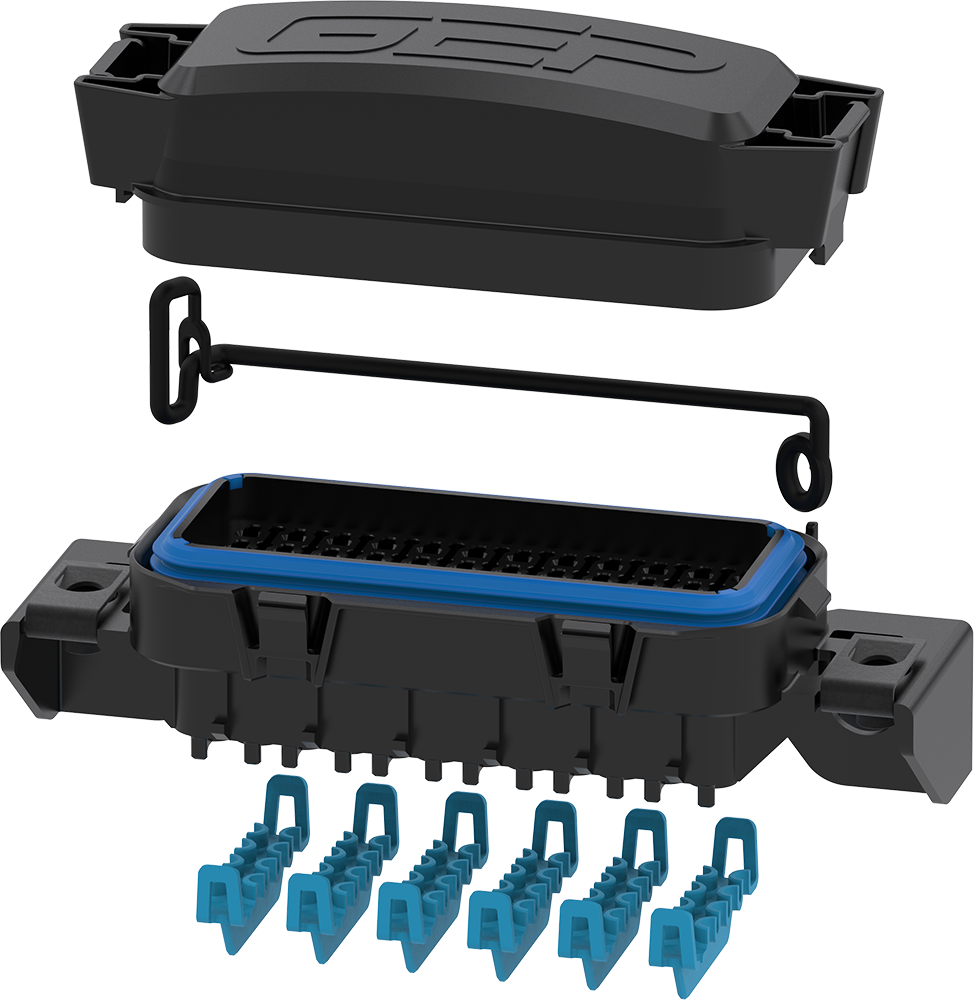
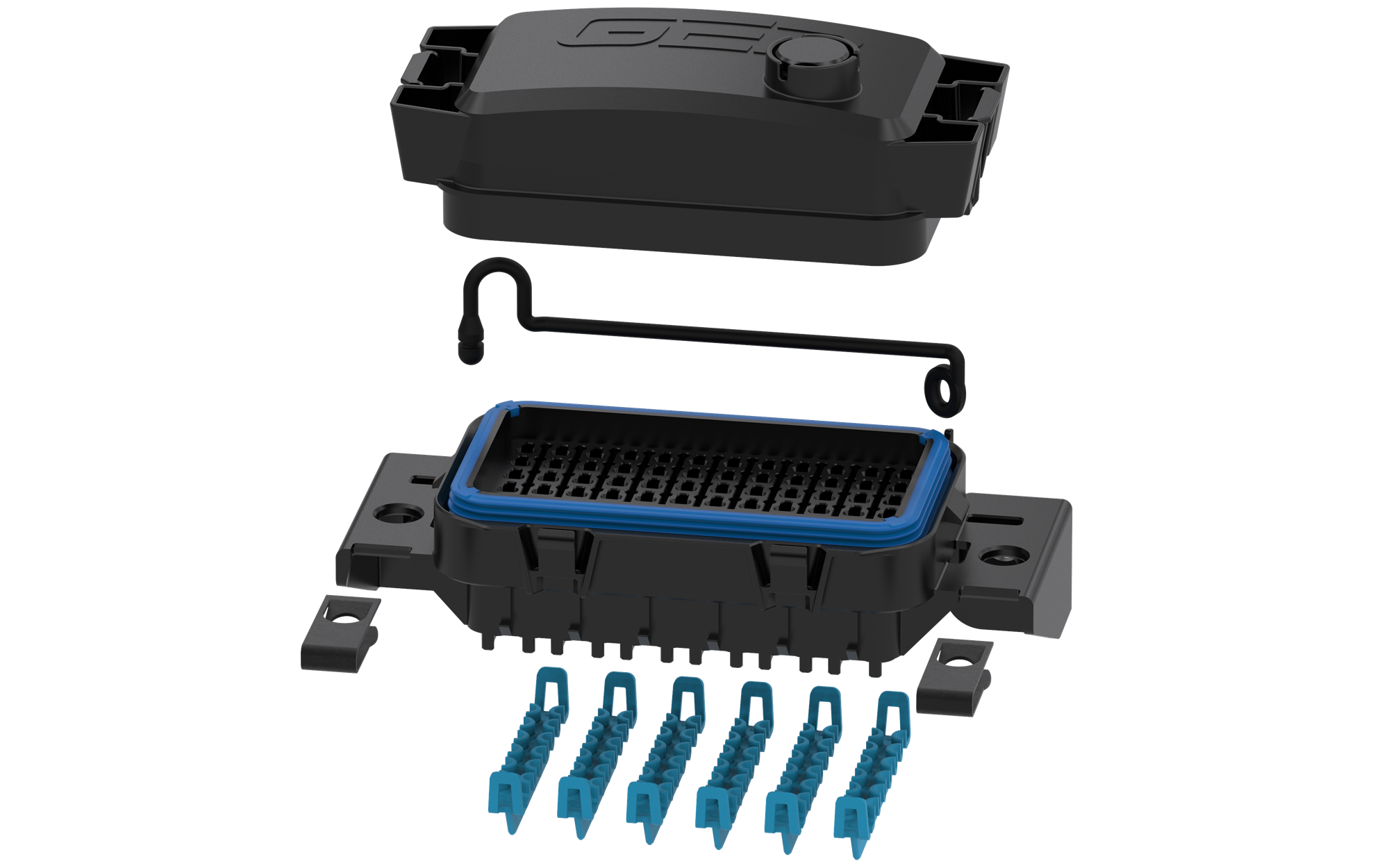
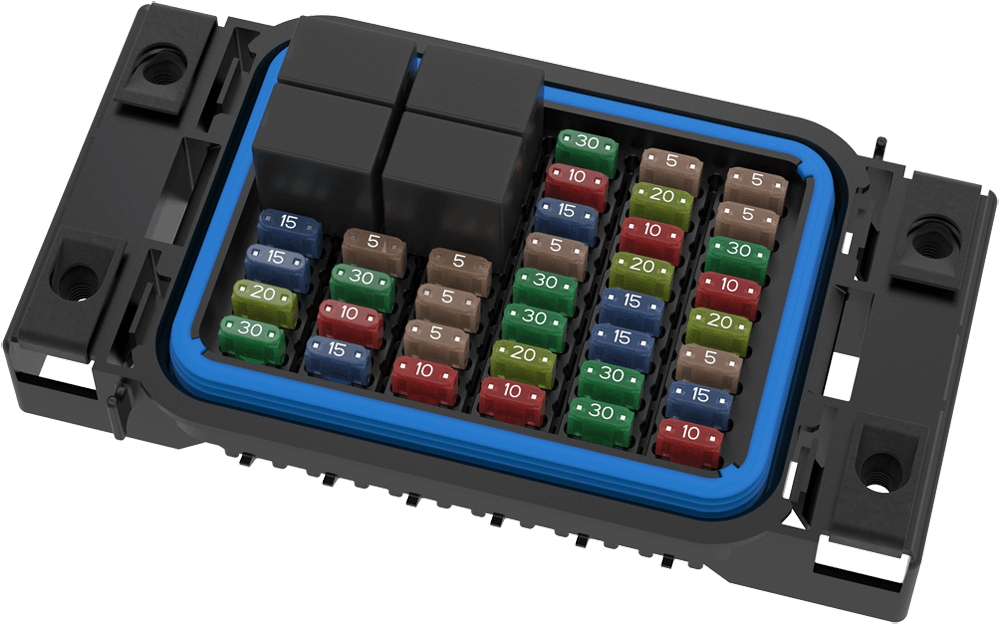
This range gives OEMs more flexibility when matching PDM capacity to equipment requirements. Smaller applications can use stand-alone base options, while more complex systems can use stackable or high-density configurations.
Rapid Prototyping and Testing Support
The PDM family was developed on an extremely aggressive schedule. GEP Power Products’ rapid prototyping and testing capabilities helped move the solution from design to multiple agricultural equipment platforms simultaneously.
This speed was especially important because the PDM family still needed to meet harsh environmental requirements common in farming applications. Agricultural equipment is exposed to dust, moisture, vibration and field conditions where electrical assemblies need dependable protection. The PDM family uses a rugged thermoplastic enclosure with silicone seals designed to protect against dust and moisture ingress.
The 96-Way Power Distribution Module
The 96-way Power Distribution Module was initially designed to support a multi-platform product family. It is now available as a standard product from GEP Power Products. This high-density PDM is based on the Delphi Metri-Pack 280 terminal series and supports multiple configuration accessories. The design is also RoHS compliant. For OEMs working with complex agricultural equipment systems, the 96-way PDM offers a compact standard solution for high-density power distribution needs.
Key Product Features
GEP’s agricultural equipment PDM family was developed to support broad platform needs while maintaining rugged field-ready performance. Key features include:
- Multiple circuit capacity options: 12-way, 24-way, 48-way, 72-way and 96-way configurations support a range of system requirements.
- Stand-alone and stackable bases: Flexible base options help OEMs match power distribution needs to available packaging space.
- Custom labeling: Platform-specific labeling supports easier integration across different agricultural equipment programs.
- Rugged thermoplastic enclosure: Durable enclosure construction supports use in demanding field conditions.
- Silicone seals: Sealing helps protect against dust and moisture ingress.
- Rapid development support: Prototyping and testing capabilities helped support integration across multiple platforms.
- Standard 96-way availability: The high-density 96-way PDM is available as a standard product.
Custom Power Distribution Modules for Agricultural Equipment
GEP Power Products designs and engineers standard and custom power distribution components for OEM transportation, off-road and agricultural equipment applications. Whether an application requires a compact PDM, a stackable power distribution module or a high-density 96-way solution, GEP can support custom electrical distribution requirements for demanding equipment platforms.